
Chapter 2
[ Step 1: Daily Temperature Check ] ──► Express immediate physical needs without blaming your partner.
                 │
                 ▼
[ Step 2: Establish Micro-Breaks  ] ──► Block out guaranteed 10-to-15 minute windows for personal recovery.
                 │
                 ▼
[ Step 3: Radical Grace Policy    ] ──► Explicitly agree that harsh words spoken at 3:00 AM do not count.
-
Implement a "Temperature Check" System: Set aside five minutes every single day for a brief, blame-free check-in. Use this time to clearly state your current physical and emotional battery levels (e.g., "I am running at 5% right now, I desperately need a snack before I can think clearly"), allowing your partner to step in without taking the distress personally.
-
Coordinate Structured Micro-Breaks: Instead of waiting until someone reaches a breaking point to ask for a breather, build tiny, guaranteed windows of recovery into the day. Giving each partner a scheduled, non-negotiable 15-minute block to shower, step outside, or sit in silence prevents the feeling of being trapped.
-
Extend a Radical Grace Policy: A newborn house is a medical and emotional recovery zone. Couples must establish a mutual agreement that tense words spoken during moments of extreme exhaustion are treated as symptoms of fatigue, not reflections of the state of the marriage.
Conclusion: Turning the Battleground Back into a Team
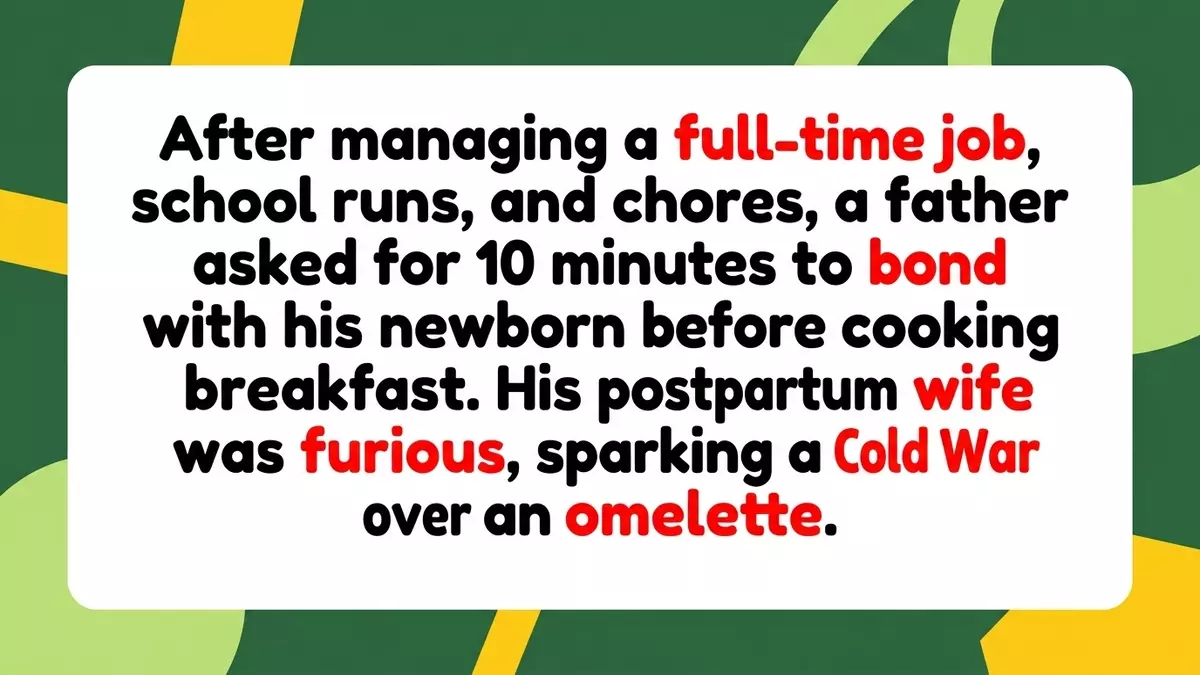
Ultimately, the "Omelette Cold War" is a powerful reminder that in the trenches of early parenthood, there are rarely clear-cut villains. On one hand, a recovering mother is managing intense physical and hormonal upheaval. On the other, a supportive partner juggling employment, household management, and childcare is bound to experience profound burnout if their efforts go completely unappreciated.
To move forward, this couple must stop litigating who had a harder morning and realize that they are fighting the same enemy: sheer exhaustion. By putting down the criticism, stepping away from the emotional ledger, and re-establishing a sense of shared teamwork, they can turn their kitchen back into a place of mutual comfort rather than a domestic battleground.
Frequently Asked Questions (FAQs)
1. Was the husband wrong to ask for a 10-minute break while his wife was waiting for food?
No, asking for a brief moment to catch your breath and connect with your child is a healthy boundary. However, because his postpartum wife was likely experiencing intense physical depletion or low blood sugar, the timing of the request collided with an immediate biological need, turning a simple pause into a point of high distress.
2. How does sleep deprivation affect a couple's communication during the postpartum period?
Severe sleep deprivation impairs the prefrontal cortex—the region of the brain responsible for impulse control, logical thinking, and emotional regulation. This makes it incredibly difficult for tired parents to filter their words, causing minor annoyances to feel like direct personal attacks and accelerating arguments before either partner can stop them.
3. What is the "demand-withdraw" pattern in relationship psychology?
The demand-withdraw pattern occurs when one partner raises a concern or makes a request (often delivered with an edge of criticism due to stress), causing the other partner to emotionally retreat or shut down to protect themselves. This withdrawal frustrates the demanding partner, causing them to push harder and trapping the couple in a destructive loop of escalation and silence.
4. How can a husband best support a postpartum wife without burning himself out?
The key is shifting from reactive survival to proactive planning. Instead of trying to guess needs on the fly while handling chores, couples should explicitly divide core responsibilities based on current capacities. It is also vital for the husband to communicate his own physical limits clearly and calmly before resentment builds up to an explosion.
5. When should a struggling young family consider professional marriage counseling?
If a couple finds themselves trapped in a repetitive cycle of bitter silence, chronic criticism, or deep resentment that lasts weeks beyond immediate sleepless nights, seeking professional guidance can be incredibly helpful. A certified couples counselor or a postpartum support specialist provides a safe, objective space to untangle communication breakdowns and help the partners remember they are on the same team.