
Chapter 2
Public Consensus: Online Communities Rally for Boundaries
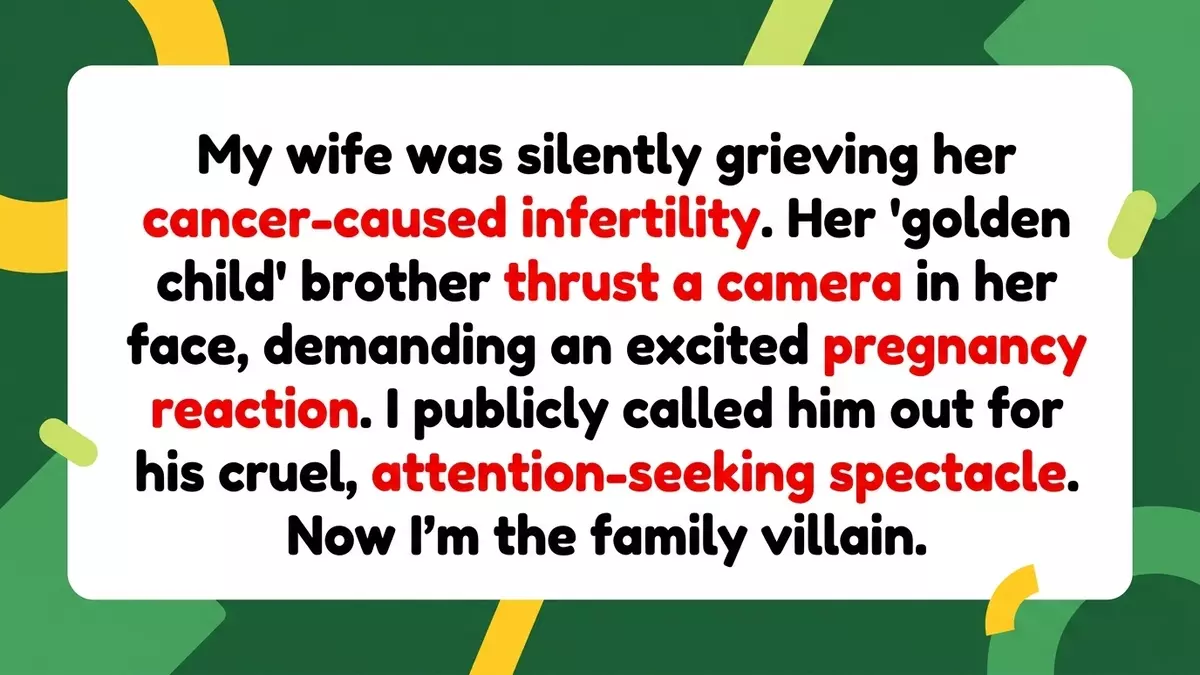
When the breakdown of the family event was shared on popular online discussion forums, the public response was overwhelmingly decisive. The internet community rallied behind the husband's protective stance, offering a sharp critique of the toxic family dynamics:
-
Condemnation of the Performance: Thousands of voters labeled the brother-in-law's recorded reveal as thoughtless and self-absorbed, stating that turning a deeply sensitive medical context into a content-generation moment was inexcusable.
-
The Entitlement Variable: Commenters pointed out that the brother-in-law's defensive anger after being called out was a classic manifestation of "golden child" entitlement. Rather than apologizing for hurting his sister, he threw a tantrum because his perfect moment had been interrupted.
-
A Call for Balanced Grace: A minor contingent of observers suggested that while the delivery was poor, the excitement of an upcoming birth can make people short-sighted, suggesting that both sides should eventually extend a degree of grace once the initial anger cools down.
Actionable Steps to Heal Fractured Family Dynamics
Navigating the tense aftermath of a major organizational meltdown requires a strategic, step-by-step approach to communication. If your family has experienced a similar clash between public celebration and private grief, consider implementing this structured recovery plan:
Conclusion: Method Matters More Than the Message
Ultimately, this painful family meltdown serves as a universal reminder that when it comes to sharing monumental life changes, the exact method of delivery is just as critical as the message itself. True celebration cannot be built on a foundation of forced compliance, performance cameras, and ignored medical trauma. By standing up to protect his wife's peace during a vulnerable moment, this husband highlighted an essential truth: personal boundaries and health milestones must always be protected, and real family love requires the emotional intelligence to respect an individual's private grief.
Frequently Asked Questions (FAQ)
What is the best way to support a partner who is dealing with post-cancer infertility?
Supporting a spouse through oncology-driven infertility requires continuous validation and active listening. Acknowledge that their grief is entirely real and has no fixed expiration date. Protect them from high-pressure family events, manage communication with extended relatives on their behalf, and consider attending specialized reproductive counseling sessions together to process the unique trauma of medical life changes.
How does a parent's favoritism affect how siblings interact as adults?
When parents consistently designate a "golden child" and an "underdog" during youth, it establishes a toxic behavioral pattern that persists long into their adult lives. The favored sibling often grows up expecting continuous compliance and center-stage attention, while the less-favored sibling harbors deep-seated resentment. Breaking this automated cycle requires adult siblings to actively step out of their childhood roles and establish firm, adult-to-adult boundaries.
Can medical treatments like chemotherapy cause permanent infertility?
Yes. Many high-dose chemotherapy regimens and radiation therapies targeting the pelvic region can damage developing eggs, deplete ovarian reserves, or harm testicular tissue, leading to temporary or permanent infertility. Oncologists frequently discuss fertility preservation options—such as freezing eggs or embryos—prior to beginning treatment, but the fast, emergency nature of cancer care means this is not always medically possible.
How do I tell my family I am skipping a baby shower without causing drama?
Deliver the news early, firmly, and neutrally. You can send a brief message saying: "I am so incredibly happy for you and want to send all my love to the growing family. Because of my recent personal health and fertility journey, attending a baby shower is emotionally challenging for me right now. I will be sending a gift from your registry and would love to drop off a meal privately after the baby arrives instead!"